










What Does HVAC Tune Up Include for Your Home?
- Eddie Diocson

- Aug 17
- 5 min read
When your AC is running through a Fullerton heat wave or your furnace kicks on during a cool Southern California night, you expect steady comfort without surprises. So, what does HVAC tune up include? A professional tune-up is a detailed maintenance visit that checks the equipment’s performance, cleans key components, addresses small concerns early, and helps your heating and cooling system operate safely and efficiently.
It is not just a quick filter change or a technician glancing at the thermostat. The exact checklist depends on whether the visit is for an air conditioner, heat pump, furnace, or complete HVAC system. Your system’s age, condition, and recent performance also matter. But the purpose stays the same: reduce the chance that a manageable maintenance issue becomes an inconvenient repair call.
What Does an HVAC Tune Up Include?
A quality HVAC tune-up combines inspection, cleaning, testing, and adjustment. Your technician should evaluate the system as a whole, not only the part that appears to be working hardest. Airflow, electrical connections, controls, drainage, and safety devices all affect comfort and reliability.
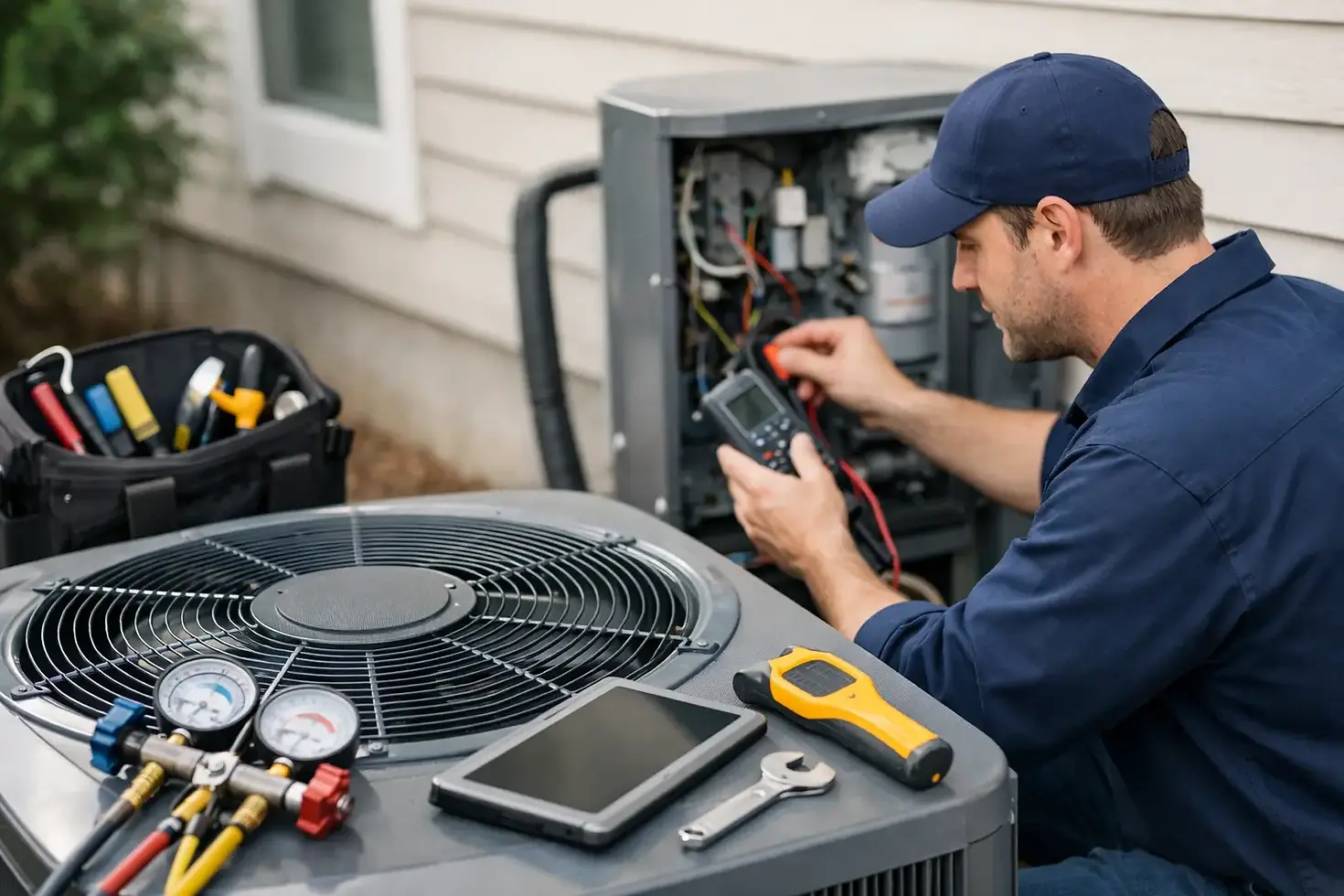
For air conditioning equipment, the technician typically starts by checking thermostat operation and confirming the system starts, runs, and shuts down as it should. They inspect the outdoor condenser and indoor components for visible damage, corrosion, loose wiring, unusual noise, and signs of wear. They also measure operating conditions to spot issues that are not obvious from a visual inspection.
Cleaning is an essential part of the visit. Dust and debris around the outdoor unit can restrict airflow and make the AC work harder. A technician may clear loose debris, inspect the condenser coil, and recommend deeper coil cleaning when buildup is affecting performance. Inside, they inspect the evaporator area, blower compartment, and air filter condition. A dirty filter is one of the most common causes of poor airflow, reduced efficiency, and unnecessary strain on HVAC equipment.
The technician also checks the condensate drain system. During cooling season, your AC removes moisture from indoor air. That moisture has to drain properly. A clogged drain line can lead to water damage, system shutdowns, musty odors, or elevated indoor humidity. Catching drainage trouble during maintenance is far easier than discovering it after water has backed up into a ceiling, closet, or equipment area.
Electrical and performance testing
Your HVAC system relies on electrical components that wear over time. During a tune-up, the technician inspects wiring and electrical connections, tests capacitors and contactors where applicable, and checks the condition of motors and controls. Loose connections or weak electrical components can contribute to hard starts, intermittent operation, or unexpected breakdowns.
Performance testing can include checking temperature differences across the system, verifying airflow, monitoring refrigerant-related operating readings, and listening for signs of mechanical trouble. Refrigerant is not something that should be routinely “topped off” without a reason. If readings suggest the system may be low, a qualified technician should investigate for a leak or another underlying issue rather than treating refrigerant as a regular consumable.
A tune-up may also include lubricating moving parts on older equipment when the manufacturer calls for it. Many newer motors are permanently sealed and do not need lubrication. This is one reason a real maintenance visit should be based on your actual equipment, not a one-size-fits-all checklist.
Heating Tune-Up Items That Protect Your Family
Heating maintenance includes many of the same airflow, electrical, and thermostat checks, but furnaces require additional safety attention. If your home has a gas furnace, the technician should inspect the burners, ignition system, flame sensor, gas connections, venting, and heat exchanger area. These components play a direct role in safe operation.
A clean burner assembly and properly operating ignition system help the furnace start smoothly. A dirty flame sensor, for example, can cause a furnace to start and then shut off shortly afterward. That can leave your home cold even though the equipment appears to be trying to run.
The heat exchanger deserves careful inspection because it separates combustion gases from the air circulated through your home. A technician looks for visible deterioration, corrosion, or other warning signs. Carbon monoxide safety checks and venting inspection are especially important for gas heating equipment. If a safety concern is identified, the right response is not to keep running the furnace and hope for the best. Your technician should explain the issue clearly and discuss safe repair or replacement options.
Heat pumps need seasonal attention too. Because they provide both cooling and heating, they work throughout much of the year. A heat pump tune-up may include checking the reversing valve operation, defrost controls, outdoor coil condition, refrigerant-related performance readings, and auxiliary heat operation. The maintenance details vary, but the goal is the same: dependable comfort in every mode.
Airflow and Indoor Comfort Matter Too
An HVAC tune-up should not focus only on the equipment cabinet. Many comfort complaints start with airflow problems elsewhere in the home. A system can be mechanically sound yet still leave certain rooms too warm, too cool, stuffy, or humid.
During maintenance, a technician can look for restricted filters, dirty blower components, blocked return vents, damaged duct connections, and weak airflow at supply registers. They may also identify signs that duct cleaning, duct repair, insulation improvements, filtration upgrades, or air distribution adjustments could help. These are not automatically required with every tune-up. They become relevant when the home’s airflow, dust levels, hot and cold spots, or indoor air quality point to a larger comfort issue.
This whole-home perspective matters in Southern California homes where attic heat, duct leakage, and uneven insulation can make an AC system seem underpowered. Replacing equipment without addressing major airflow or insulation concerns may not deliver the comfort improvement a homeowner expects.
What a Tune-Up Does Not Always Include
A tune-up is preventative maintenance, not a guarantee that an older system will never fail. No technician can predict every future issue, especially when a unit is near the end of its expected service life. Maintenance reduces risk and helps identify concerns early, but parts can still wear out between visits.
It also does not always include repairs, replacement parts, major cleaning, refrigerant leak repair, duct work, or extensive indoor air quality services. If the technician finds a failed capacitor, a worn motor, a clogged coil that needs deeper cleaning, or a safety concern, those items may require separate approval. A trustworthy service professional will explain what was found, why it matters, what can wait, and what should be handled right away.
Be cautious of a bargain tune-up that promises a complete system evaluation but lasts only a few minutes. Homeowners should receive a clear explanation of the system’s condition and any recommended next steps. You deserve straightforward information, not pressure or vague warnings.
How Often Should You Schedule HVAC Maintenance?
Most homes benefit from HVAC maintenance twice each year: an AC tune-up before the warm season and a heating tune-up before cooler weather arrives. If you have a heat pump that handles both jobs, it still benefits from seasonal service because it runs in both heating and cooling modes.
Homes with pets, heavy system use, allergy concerns, older equipment, or recurring airflow issues may need closer attention. The same is true for rental properties and households that want to avoid emergency service whenever possible. Routine maintenance gives you more control over timing and budget than waiting until the system quits on the hottest day of the year.
Between visits, keep outdoor equipment clear of leaves and debris, replace filters on the schedule recommended for your filter type and household, and avoid closing too many supply vents. If you notice weak airflow, unusual sounds, water around the indoor unit, short cycling, rising utility bills, or rooms that never reach the thermostat setting, schedule service rather than waiting for a full breakdown.
A tune-up is one of the simplest ways to protect the equipment that keeps your home comfortable. Champion Aire Heating and Air Conditioning can help you stay ahead of repairs with first-class seasonal maintenance and practical recommendations based on your home’s real needs. Schedule service before extreme weather puts your system to the test.


Comments