










When to Replace Home Air Conditioner

A struggling AC usually does not fail at a convenient time. It starts with longer run times, uneven cooling, rising energy bills, or one more repair call during the hottest week of the year. If you are wondering when to replace home air conditioner equipment, the real answer comes down to cost, comfort, and how much longer your system can reasonably be trusted.
For many Southern California homeowners, replacement is not just about age. It is about whether your current system is still delivering peace of mind. A unit that keeps your home cool, runs efficiently, and responds well to maintenance may have some life left. But a system that is draining your budget and leaving hot spots around the house is sending a clear message.
When to replace home air conditioner equipment
Most home air conditioners last around 10 to 15 years, but lifespan is only part of the story. A well-maintained system may stretch beyond that range, while a neglected unit near the coast, in heavy heat, or with airflow issues may wear out sooner. Age matters because older systems lose efficiency, parts become harder to source, and breakdowns tend to come more often.
If your air conditioner is over 12 years old and starting to need frequent service, replacement deserves serious consideration. That does not mean every repair on an older unit is a bad investment. A minor capacitor or contactor repair on an otherwise dependable system can still make sense. The problem is when those repairs start stacking up and you are paying to keep an unreliable system alive.
Homeowners often wait for total failure before replacing equipment. That is understandable, but it is not always the most cost-effective move. An emergency replacement in peak summer can feel rushed. Planning ahead gives you more time to consider system size, efficiency, financing, rebates, and whether your home would benefit from related upgrades like duct improvements, attic insulation, or better indoor air quality solutions.
The repair versus replacement tipping point
The biggest question is usually not whether the AC is old. It is whether repairing it again makes financial sense.
A useful rule of thumb is to compare the repair cost with the age and condition of the system. If you are facing a major repair on a unit already near the end of its expected life, replacement often becomes the smarter long-term choice. That is especially true if the repair involves the compressor, evaporator coil, or refrigerant leaks in an older system.
You should also look at your repair history over the last two to three years. One isolated issue is one thing. Multiple service calls, refrigerant problems, electrical failures, and chronic performance complaints point to a system that is wearing down across the board. At that point, you are not paying for peace of mind. You are paying for temporary relief.
There is also a comfort trade-off. Some homeowners keep repairing older equipment because it still turns on. But if it no longer cools the home evenly, struggles on hot afternoons, or runs constantly without ever quite catching up, it is not doing the job you need it to do.
Signs your AC is nearing the end
A few warning signs tend to show up before replacement becomes unavoidable. One of the most common is a steady increase in your electric bill without a major change in usage. As systems age, they often lose efficiency gradually, so the monthly cost creep can be easy to miss until summer hits hard.
Another sign is uneven temperatures from room to room. Sometimes that points to ductwork or insulation issues rather than the air conditioner itself, which is why a full-home approach matters. But if your system is old and airflow problems are paired with poor cooling performance, replacement may be part of the answer.
Frequent repairs are another red flag. If you feel like you know your HVAC technician by first name because the system keeps breaking down, that pattern matters. A dependable air conditioner should not need constant attention.
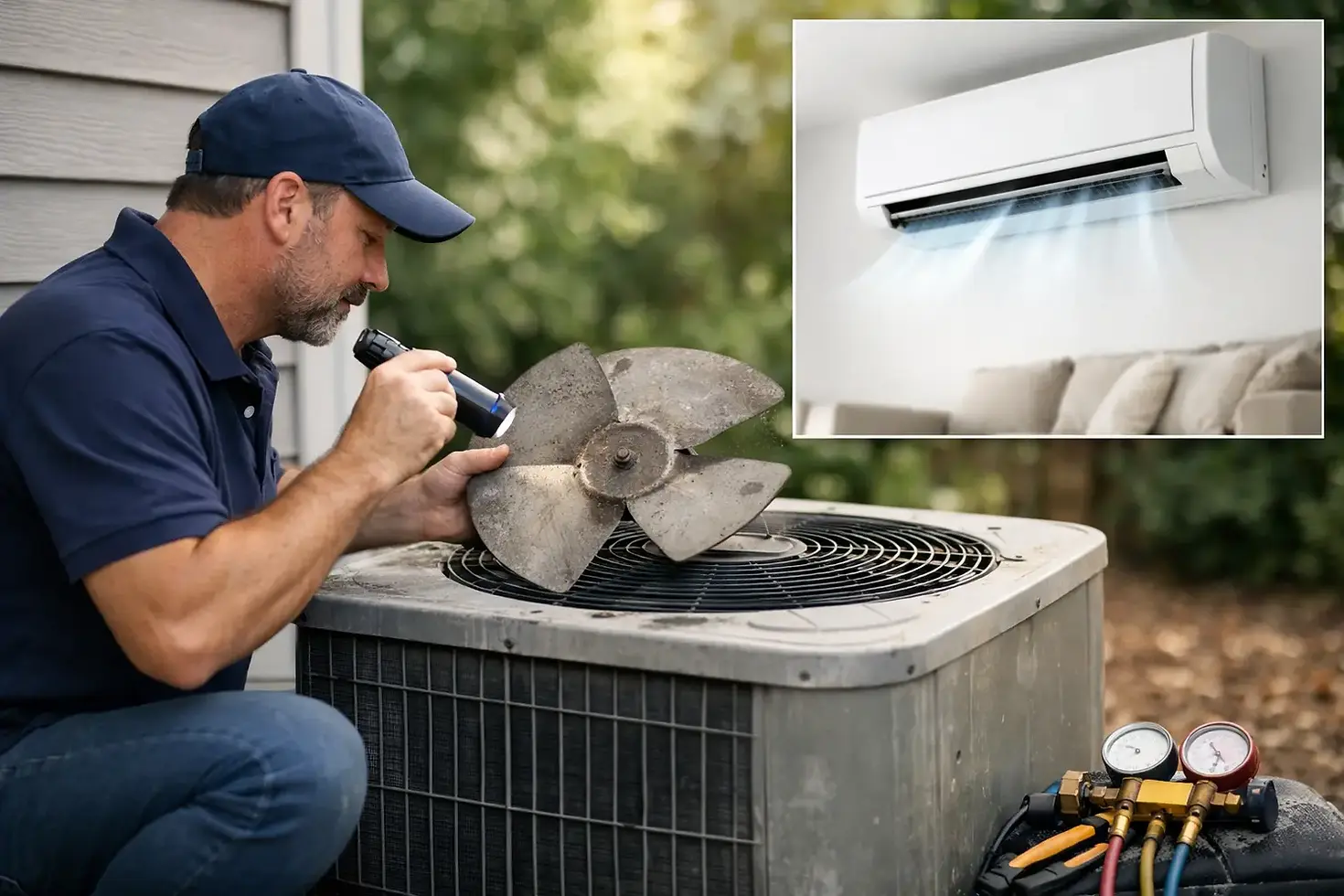
Pay attention to how the system sounds and smells as well. Grinding, banging, rattling, or buzzing can signal internal wear. Musty odors may point to moisture issues. Burning smells can indicate electrical trouble and should never be ignored.
Short cycling is another major clue. If the unit turns on and off frequently without completing a full cooling cycle, it can be caused by thermostat issues, airflow restrictions, or an oversized system. But in older units, it can also be a sign of declining performance and added wear.
Why old refrigerant can change the decision
If your system uses older refrigerant, replacement may make more sense sooner than later. As refrigerant types age out of common use, repairs involving leaks or recharging become more expensive and less practical. A small refrigerant issue on a newer system may be repairable. The same issue on an older unit can become the tipping point.
This is where homeowners sometimes spend more than they need to. They approve a costly repair because they want one more season out of the system, only to face another major problem shortly after. If your AC is older, low on refrigerant, and already underperforming, replacing it may protect you from throwing good money after bad.
Efficiency matters, but so does the whole house
A new air conditioner can lower energy use, but equipment alone does not solve every comfort problem. If your home has leaky ducts, poor insulation, dirty air distribution components, or inadequate filtration, the system has to work harder than it should.
That is why replacement decisions should be made with the whole house in mind. In some homes, a new AC paired with duct improvements or attic insulation delivers a much bigger comfort upgrade than equipment replacement alone. In others, poor airflow is the main issue and the existing system may not actually be the only problem.
This is also why oversized or undersized equipment can create headaches. Bigger is not automatically better. A properly sized system should cool effectively, manage humidity appropriately, and run in balanced cycles. If the old unit was not correctly matched to the home, replacement is a chance to fix that.
When replacing early is actually the smarter move
Some homeowners hesitate because the AC still works. That is fair. No one wants to replace equipment before it is necessary. But there are times when replacing before total failure is the better financial move.
If your system is old, inefficient, and entering the stage where expensive components are likely to fail, proactive replacement can reduce stress and give you more control over the decision. It also helps you avoid emergency scheduling during a heat wave when being without cooling is more than an inconvenience.
Planned replacement also opens the door to financing options and seasonal promotions that may not feel as accessible in a last-minute emergency. For budget-conscious households, that planning can make a major difference.
How to know for sure
The best way to know when to replace home air conditioner equipment is to look at the full picture instead of one symptom. Age, repair cost, performance, refrigerant type, energy use, and household comfort all matter. So does your timeline. If you are already nervous every time the thermostat clicks on, that tells you something too.
A professional evaluation should not be a sales pitch. It should give you a clear explanation of what is wrong, what a repair would realistically accomplish, how much life may be left in the unit, and whether other home comfort issues are contributing to the problem. For homeowners in Fullerton and nearby communities, that kind of honest guidance is often what turns a stressful decision into a practical one.
Champion Aire Heating and Air Conditioning works with homeowners who need that balance of urgency and peace of mind. Sometimes the right answer is repair. Sometimes replacement is the better investment. The key is knowing the difference before another hot day turns a warning sign into a breakdown.
If your AC is getting louder, running longer, costing more, or leaving parts of your home uncomfortable, do not wait for complete failure to force the issue. A timely evaluation now can save money, protect comfort, and help you move forward with confidence.


Comments