











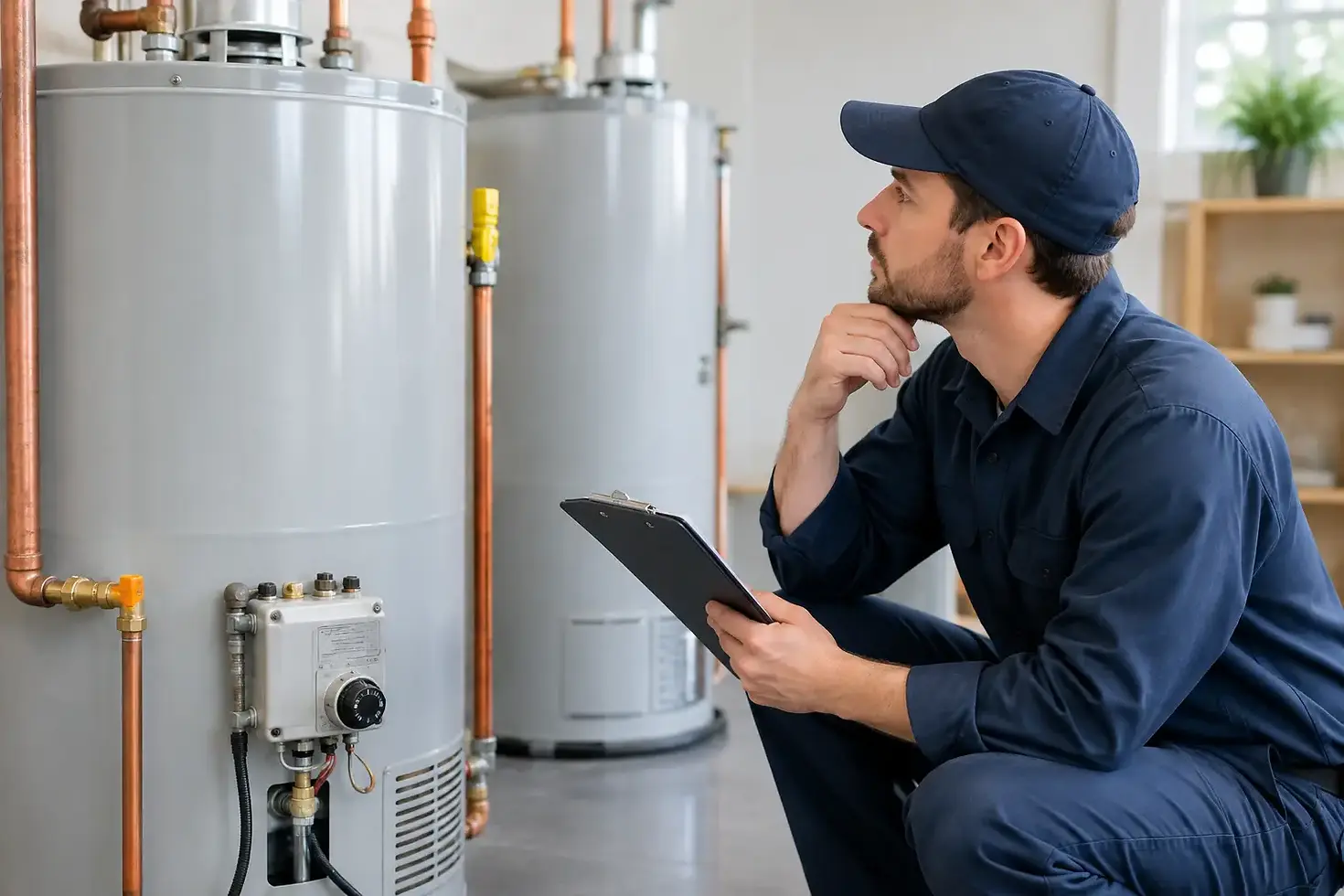
Water Heater Replacement Timing: When to Act

A cold shower is unpleasant. A leaking water heater in the garage, closet, or attic can be much worse. Good water heater replacement timing helps Fullerton homeowners avoid surprise water damage, rising utility bills, and the stress of losing hot water when the household needs it most. The right time to replace a unit is not always the day it stops working. In many cases, the warning signs show up months before a complete failure.
Water Heater Replacement Timing Starts With Age
Most conventional tank water heaters last about 8 to 12 years with proper installation and maintenance. Some last longer, while others fail earlier because of hard water, heavy use, poor maintenance, or installation conditions. Southern California households often put steady demand on water heaters, especially in busy homes with multiple showers, laundry, and dishwashing happening every day.
Start by finding the serial number on the manufacturer label. Many manufacturers use the first letter and following numbers to identify the production date, although formats vary. If your water heater is approaching the 10-year mark, it is wise to plan ahead even if it still produces hot water.
Age alone does not require an immediate replacement. A well-maintained 11-year-old unit with no corrosion, leaks, or performance issues may still have useful life left. But an older heater deserves closer attention. Waiting for a tank to fail can turn a planned home upgrade into an emergency cleanup and installation decision.
Signs It May Be Time to Replace Instead of Repair
A professional inspection can determine whether a specific problem is repairable. Components such as thermostats, heating elements, pilot assemblies, igniters, pressure relief valves, and anode rods can often be replaced. A tank with internal corrosion cannot be repaired in the same way.
These signs usually mean it is time to discuss replacement options:
Water around the base of the tank: Condensation can occur, but ongoing puddles, rusty water, or a visible tank leak should be taken seriously. Once the tank itself leaks, replacement is typically the practical solution.
Rust-colored water or corrosion at connections: Rust may come from aging pipes, but it can also signal corrosion inside the water heater. Corrosion around the tank, fittings, or temperature and pressure relief valve needs prompt evaluation.
Rumbling, popping, or banging sounds: Mineral sediment can collect at the bottom of a tank. Flushing may help when caught early, but heavy buildup reduces efficiency and can overheat the tank bottom.
Hot water that runs out too quickly: A loss of capacity may be caused by a failed element in an electric unit, a burner issue in a gas unit, sediment, or an undersized tank. If the heater is older, replacement may provide better value than repeated repairs.
Repairs that keep adding up: One isolated repair can make sense. Several repairs on an aging unit are a sign to compare the repair cost with the cost and benefits of a new water heater.
Do not ignore a leaking temperature and pressure relief valve, the smell of gas, scorching around a gas appliance, or water near electrical connections. Those conditions call for immediate professional service. If you smell gas, leave the area, avoid switches and open flames, and contact the gas utility or emergency services as appropriate before arranging appliance repair.
The Repair-or-Replace Decision Depends on the Whole Picture
Homeowners often ask for a simple rule, such as replacing any water heater after 10 years. In reality, the decision depends on the condition of the equipment and the home’s needs.
A newer water heater with a clear, limited problem is often worth repairing. For example, replacing a worn anode rod or faulty heating element can extend useful life and protect your budget. On the other hand, spending a significant amount on a major repair for a 12-year-old tank may only postpone replacement for a short time.
Consider how much the repair costs, how old the unit is, whether the tank is corroding, and whether hot water demand has changed. A growing family may need more capacity than the existing model can deliver. A homeowner planning to stay in the home for years may also benefit from a more efficient option that lowers operating costs over time.
Placement matters, too. A water heater in a finished interior closet or attic creates greater water-damage risk than one located in a garage with a properly installed drain pan and drain line. In higher-risk locations, proactive replacement can offer meaningful peace of mind.
Plan Before the Emergency
Replacing a water heater before it fails gives you choices. You can compare tank sizes, energy sources, efficiency ratings, installation requirements, and available financing without making a rushed decision after a cold shower or leak.
A standard storage-tank water heater is often a straightforward fit for homes that need reliable, familiar performance at a lower upfront cost. High-efficiency tank models may reduce energy use. Tankless water heaters provide hot water on demand and can save space, but they may require changes to gas piping, venting, electrical service, or water lines. The best choice depends on your household’s usage patterns, available utilities, budget, and installation conditions.
Do not select a larger unit automatically. Oversizing can raise purchase and energy costs without improving daily comfort. Undersizing causes frustrating shortages during peak-use times. A qualified technician can assess the number of bathrooms, household size, fixture demand, recovery rate, and fuel type to recommend an appropriate system.
For gas water heaters, current safety and venting requirements are especially important. Newer equipment may not be a direct swap for an older model. Professional installation helps ensure correct combustion air, venting, gas connections, drainage, seismic strapping, and code compliance.
Maintenance Can Improve Your Timing, Not Eliminate Replacement
Routine maintenance can help a water heater operate more efficiently and may extend its life. Annual service may include checking the anode rod, inspecting the temperature and pressure relief valve, looking for leaks and corrosion, evaluating combustion on gas models, and flushing sediment when appropriate.
Maintenance is not a guarantee against failure. Internal tank lining eventually wears down, particularly in areas with mineral-heavy water. Still, regular inspections give you a better chance of spotting trouble before it becomes an urgent problem.
If you recently moved into a home and do not know the water heater’s history, schedule an evaluation. You will learn the unit’s approximate age, overall condition, and whether preventive maintenance or replacement planning makes sense.
When to Call for Water Heater Help
Call for service promptly if you have no hot water, fluctuating water temperatures, visible leaks, unusual sounds, rusty water, or a pilot light that will not stay on. These issues do not always mean replacement is necessary, but delaying service can allow a manageable repair to become a larger problem.
For homeowners considering an upgrade, Champion Aire Heating and Air Conditioning can help assess your current equipment and explain practical options for your home. A clear estimate and professional recommendation make it easier to decide whether repair, maintenance, or replacement is the better investment.
A water heater should support your daily routine quietly, reliably, and safely. If yours is aging or showing warning signs, schedule an inspection while you still have time to choose the solution that fits your home and budget.


Comments